FROM 20 JUNE TO 31 JULY 2025
MALINCONIC EXPRESSIONISM
OF MIMMA GERMANÀ
“Melancholy is not sadness, but a silent song of the soul.”
Mimmo Germana
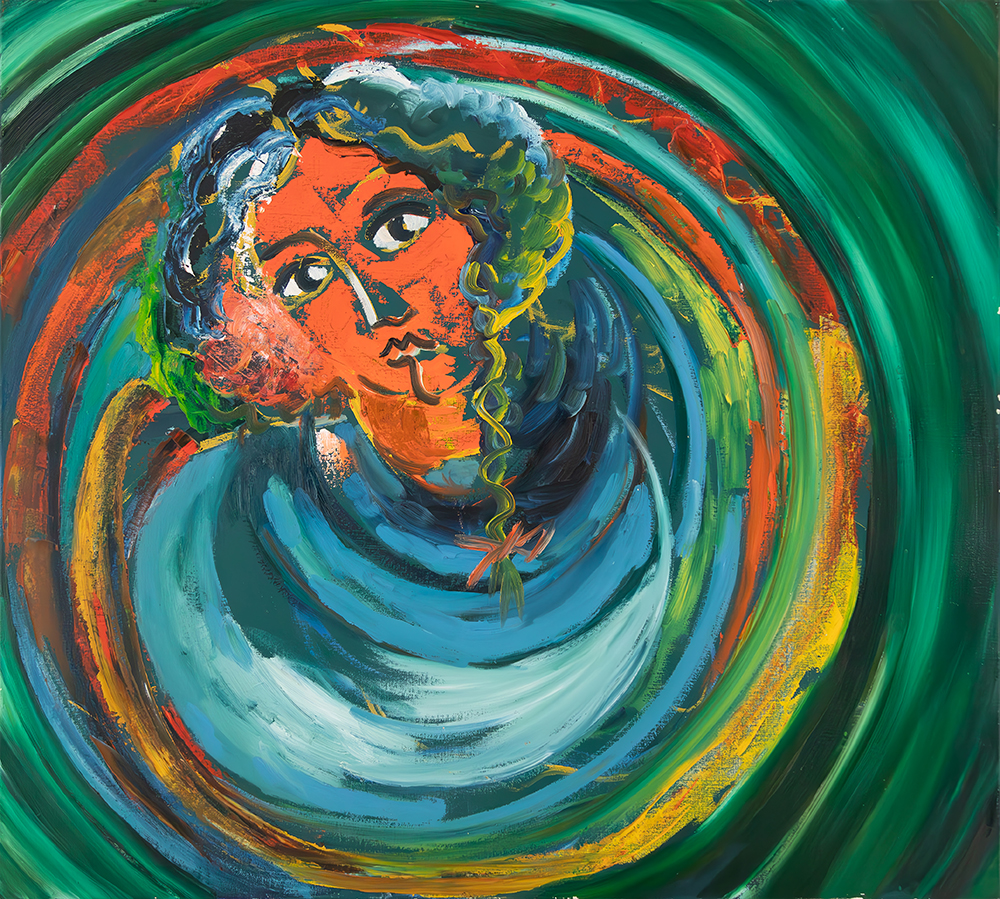
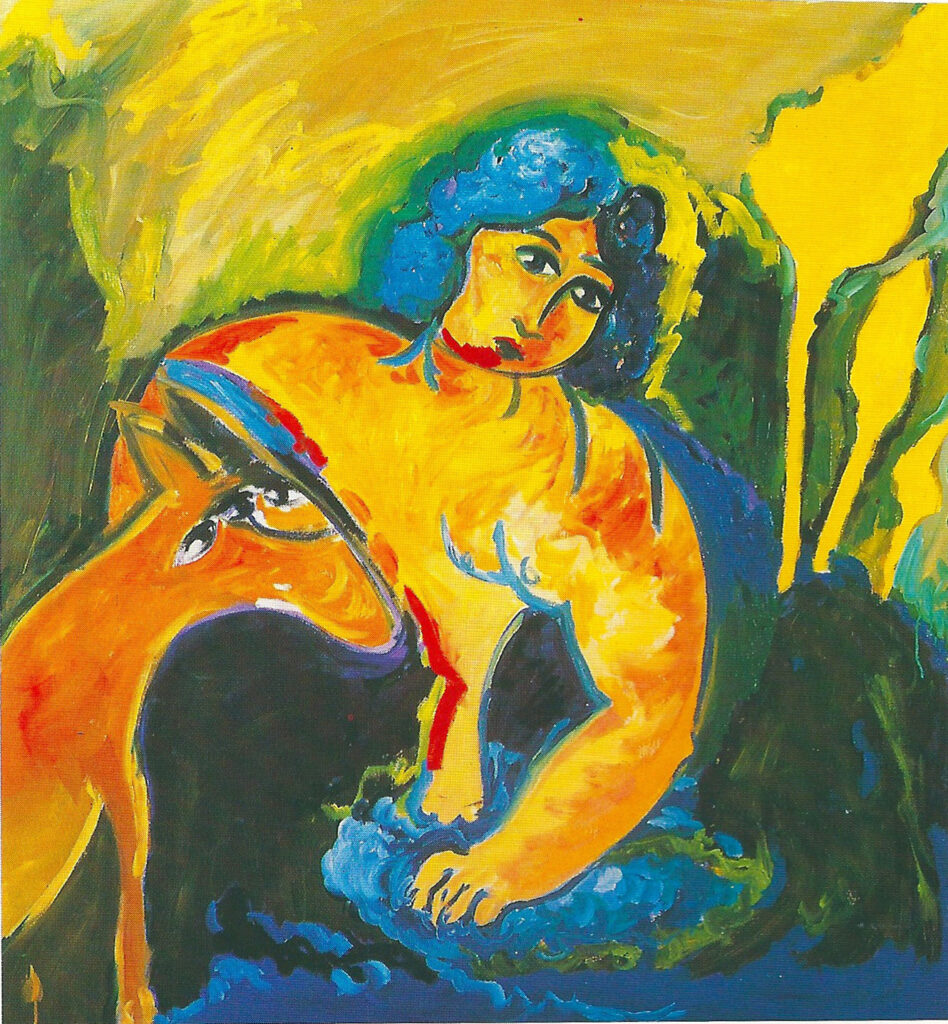
The exhibition Melancholic Expressionism is a vibrant journey into the intimacy of being and into the pictorial universe of Mimmo Germanà, an artist who has been able to transform the force of expressive gesture into a profound and visionary narrative. In these works, color becomes emotion, the human figure becomes symbol, and painting becomes an interior space, inhabited by tensions, memories and silence.
With a completely personal expressionist language, Germanà leads us to a dimension where melancholy is not a burden, but a fertile state of mind, from which images of poetic intensity are born. It is a contemplative condition, in which man appears in his most vulnerable and authentic essence. Suspended faces, glances beyond the visible, bodies just drawn: every element seems to evoke presences that fade over time, like apparitions suspended between dream and memory.
It is a painting made of contrasts: between impetus and reflection, between dense matter and transparencies of the soul, between the urgency of telling and silence. And it is precisely in this fragile balance that the poetics of "melancholic expressionism" take shape: a painting that does not shout, but touches, that invites you to listen deeper than to mere vision.
With The Melancholic Expressionism, Germanà offers us an emotional mirror, in which to recognize our most intimate concerns, unheard desires, the most true nostalgias.
The exhibition presents works covering a crucial period of his career: all the 1980s until 1991, the year before his premature death.
In that decade, Mimmo Germanà established itself as one of the most intense and original voices of the new Italian pictorial scene. In a landscape dominated by the return to figuration and by the poetics of Transavant-garde, his painting stands out for the ability to merge archaic instances and contemporary impulses into a personal and mythopoietic vision.
The invitation to the Venice Biennale in 1980 marked his consecration, alongside protagonists such as Chia, Cucchi, Paladino and De Maria. However, Germanà remains an autonomous figure: Its language, never under the influence of fashion, develops outside of citationism, closer to inner vision than conceptual construction.
Germanà does not simply paint figures or landscapes: he evokes them. His canvases, crossed by a corporeal and material colour, give life to suspended worlds between myth and memory, in which every gesture, every face, every chromaticism is the bearer of an ancestral meaning. The female figures with oval faces, animals, trees, multicolored skies are symbolic appearances, archetypes of a primitive and sensual humanity, filtered by a visionary sensibility.
His painting, far from formal refinement, embraces the force of gesture, the density of matter, the instinctive vibration of color. It is a non-dramatic but Mediterranean expressionism, rooted in the light and contrasts of its land, the South, and the emotions it preserves.
The colour, always central, becomes a vehicle of moods and emotional tensions, conveying a deep nostalgia for an ideal and lost world.
In recent years, Germanà further deepens this lyrical dimension. His painting becomes more introspective, loaded with symbols and reflections on time and memory. It is an art that turns inside, trying to visually return the density of existence, the weight of life lived, and together, its mysterious lightness.
His death in 1992 abruptly interrupted a career of extraordinary poetic consistency. But his works continue to live: silent and luminous witnesses of a painting that has been able to speak with sincerity, courage and depth to the most authentic emotions of the human being.
MELANCHOLIC EXPRESSIONISM
BY MIMMO GERMANY
“Melancholy is not sadness, but a silent song of the soul.”
Mimmo Germana
The exhibition Melancholic Expressionism is a vibrant journey into the intimacy of being and the picturesque universe of Mimmo Germanà, an artist who has been able to transform the power of the express gesture into a profound and visionary narrative. In these works, color becomes emotion, the human figure becomes a symbol, and painting is transformed into an interior space, affected by tensions, memories and silences.
With a completely personal expressionist language, Germanà leads us into a dimension where melancholy is not a burden, but a fertile state of mind, from which images full of poetic intensity are born. It is a contemplative condition, in which man looks in his most vulnerable and authentic essence. Suspended faces, glances that go beyond the visible, barely traced bodies: each element seems to evoke presences that fade in time, like appearances suspended between dream and memory.
It is a painting made of contrasts: between impetus and reflection, between dense matter and transparency of the soul, between the urgency to tell and silence. And it is precisely in this fragile balance that the poetics of "melancholic expressionism" takes shape: a painting that does not shut, but that touches, that invites deep listening rather than simple vision.
With Melancholic Expressionism, Germanà offers us an emotional mirror, in which to recognize our most intimate anxieties, unheard desires, truest nostalgia.
The exhibition presents works that cover a crucial period of his career: all the 1980s until 1991, the year before his premature death.
In that decade, Mimmo Germanà established himself as one of the most intense and original voices of the new Italian painting scenes. In a landscape dominated by the return to figuration and the poetics of the Transavant-garde, his painting stands out for its ability to blend archaic impediments and contemporary impulses in a personal and mythopoetic vision.
The invitation to the Venice Biennale in 1980 marks his consecration, alongside protagonists such as Chia, Cucchi, Paladino and De Maria. However, Germanà always remains an autonomous figure: his language, never subservient to fashion, developments outside of citationism, close to interior vision than to conceptual construction.
Germanà does not simply paint figures or landscapes: he evokes them. His canvases, crossed by a corporeal and material color, give life to worlds suspended between myth and memory, in which every gesture, every face, every chromatism is the bearer of an ancestral meaning. The female figures with oval faces, the animals, the trees, the multicolored skies are symbolic appearances, archetypes of a primitive and sensual humanity, filtered by a visionary sensitivity.
His painting, far from formal refinement, embryonics the strength of the gestures, the density of the material, the instinctive vibration of the color. It is an expressionism that is not dramatic but Mediterranean, rooted in the light and contrasts of his land, the South, and in the emotions that it holds.
Color, always central, becomes a vehicle for moods and emotional tensions, transmitting a deep nostalgia for an ideal and lost world.
In recent years, Germanà has further explored this lyrical dimension. His painting becomes more introspective, loaded with symbols and reflections on time and memory. It is an art that turns towards, trying to visibly restore the density of existence, the weight of life lived, and at the same time, its mysterious lightness.
His death in 1992 abruptly interrupted a career of extraordinary poetic coherence. But his works continue to live: silent and luminous witnesses of a painting that has been able to speak with sincerity, courage and depth to the most authentic emotions of the human being.